

Genesis 2:7 reports that “God formed a man from the dust of the ground and breathed into his nostrils the breath of life.” Not content to let God have all the anima-creating fun, humanity has been assiduously attempting to copy his example ever since.
In The Metamorphoses (bk. 10), Ovid recounts how the Cypriot sculptor Pygmalion carved a woman (known post-classically as Galatea) out of ivory. She was so flawless and beautiful that he fell in love, and prayed to Aphrodite for a bride as perfect as Galatea. She granted his wish on her festival day and brought the statue to life.
Statues coming to life was a common theme in the ancient world. According to the Bibliotheca of Pseudo-Apollodorus, Talos was a “man of bronze” given as a protector of Crete by the craftsman god Hephaestus. In Meno, Plato discusses the statues of the sculptor Daedalus, which Socrates says were so lifelike that they had to be chained down lest they run away. I don’t know if that was meant as a piece of hyperbolic metaphor (like Philippides’s running is greased lightning), or if there was a folk tradition of his statues skedaddling. Plato says that true belief is like Daedalus’s statues—it tends to wander off unless tied down by reason.
In a 1373 book entitled Rosario della Vita, there’s this story about Albert the Great:
We find that Albertus Magnus, of the Preaching Friars, had such a great mind that he was able to make a metal statue modeled after the course of the planets, and endowed with such a capacity for reason that it spoke: and it was not from a diabolical art or necromancy—great intellects do not delight in such things because it is something that makes one lose his soul and body; such arts are forbidden by the faith of Christ. One day a monk went to find Albertus in his cell. As Albertus was not there, the statue replied. The monk, thinking that it was an idol of evil invention, broke it. When Albertus returned, he was very angry, telling the monk that it had taken him thirty years to make this piece and “that I did not gain this knowledge in the Order of the Black Friars.” The monk replied, “I have done wrong; please forgive me. What, can’t you make another one?” Albertus responded that it would be thirty thousand more years before another could be made, as that planet had made its course and it would not return before that time.
A later tradition holds that it was Albert’s most famous pupil—Thomas Aquinas—who broke his talking statue.
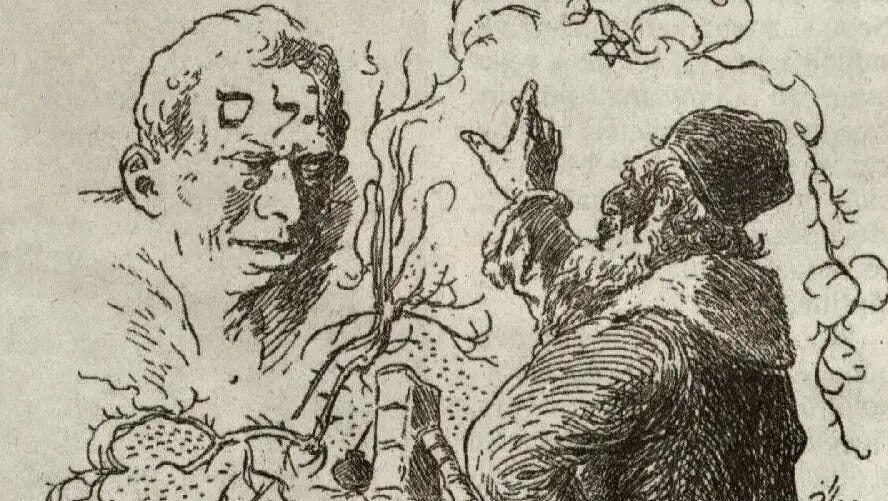
The best known statue-come-to-life story of the Middle Ages is the golem. The golem is out of Jewish folklore, and there are a lot of golem stories. The basic plot always involved a giant humanoid figure roughly hewn out of clay that rested dumb and inert until a Rabbi brought it to life. The Rabbi would write magical words (e.g. “truth” or the tetragrammaton) on the golem’s forehead, or on a slip of paper that went into the golem’s mouth, and it would animate. To deactivate your golem, just erase the magic words. Mostly golems were Jewish protectors, called into action to fight anti-semitic bad guys like Holy Roman Emperor Rudolf II, although they were occasionally said to go on a murderous rampage.
Then there’s the tale of René Descartes’s mechanical daughter. Descartes’s 1691 biographer Adrien Baillet claimed that Descartes had an illegitimate daughter named Francine who died young. In his grief, Descartes supposedly made a mechanical replica of her so realistic that, similar to the Albertus Magnus story, when Descartes was on a sea-voyage a superstitious sea captain seized the automaton and threw it overboard.
The mechanical daughter story goes back to 1699 and was put to a bunch of different polemical uses; as a critique of Descartes’s mechanistic philosophy, as a symbol of the destruction of childhood, as a means of defending Descartes against the slander of having a bastard child (What? He never knocked up the maid! M. Descartes just built this mechanical girl to illustrate how we’re nothing but pumps, gears, and springs. An easy confusion.).
By the time we get to the 19th century, more familiar tales start coming to life, like Frankenstein (1818) and Pinocchio (1881). Of course, what do you think the AI techlords are doing now, but inscribing their arcane sigils into heaps of sand (i.e. silicon wafers) in an attempt to breathe souls into our rectangular statues? Plus ça change, plus c’est la même chose.
Automata have been guardians, companions, interlocutors, replacements for the dead, symbols of hubristic overreach, and, naturally, lovers. Humans aren’t about to invent something without using it for sex 90 seconds later.

We’ve been making sex toys for at least 28,000 years. They are mentioned in the Bible (Ezekiel 16:17), where God is ticked off that the Jews took the gold and silver jewelry he gave them and melted it into dildos. Aristophanes’s Lysistrata has a more positive view. Greek women, sick of the Peloponnesian War, decide to withhold sex until their menfolk quit fighting. They have to tide themselves over somehow, though, so it’s “eight-fingered leather dildos” to the rescue until peace comes.1
Full-sized sex dolls date back to the 16th century, when cloth models were made of old clothes and taken to sea by lonely sailors. By the 1920s these had been updated to rubber. In Japan sex dolls are still referred to as Dutch Wives, in reference to the proclivities of Dutch sailors to Japan. Now we have all the wonders promised by modernity: robotic, silicone, anatomically accurate, talking sex dolls, with the most sophisticated models selling for the price of a luxury car.
The problem with human beings is that nobody’s perfect. For example:
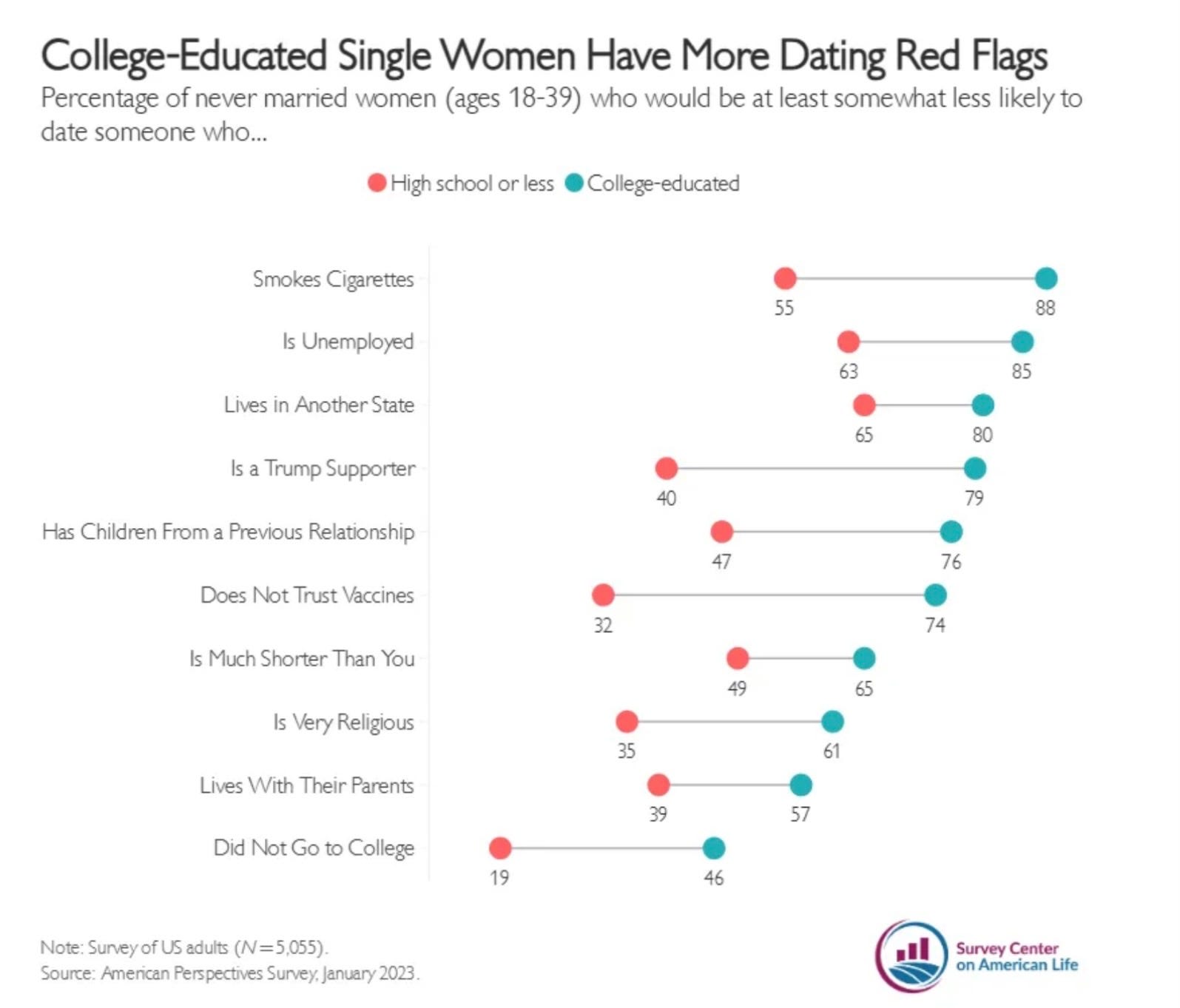
Why not opt for an AI boyfriend or girlfriend instead? In fact, there’s a new cafe in New York City catering to people with AI “partners.” Just take your tablet on a date and enjoy witty flirtation with your computer companion while only having to pay for one meal. Then afterwards you can go back home to your sex doll; they are always in the mood, never say no, are eager for the kinkiest acts, and never fail to perform. We can cut human beings—pudgy, wrinkled, moody, flawed, mortal—out entirely, replaced by our flawless talking statues.
Thi Nguyen has aptly pointed out that there is a difference between the goal of an activity and its purpose. The goal of chess is to checkmate your opponent, but the purpose of a casual game is entertainment. The goal of most games is winning but their purpose is to have fun. It’s more accurate to say that the goal of a game is to reach endstate, since for some games the idea of “winning” doesn’t make much sense. In the RPG Baldur’s Gate III, for example, there are about 17,000 possible ending variations. There’s not a specific goal to the game, although there’s a purpose to playing it.
When you can play a game perfectly you always attain the goal, but lose the purpose. Tic-tac-toe is a solved game, with a relatively small number of possible game states, and real-life games can always be driven to a draw. An adult player might never lose at tic-tac-toe, but they aren’t going to have any fun at it either. Oh, a tie again. Yay. Perfection is a worthy objective only in the limit, where we can get asymptotically close but never attain it. Watching the Olympics would be pointless and boring if every athlete were perfect, and everyone finished at the same time.
I think those drawn to the talking statues confuse goals and purposes. My students think the goal of writing a paper is getting an A, or passing the course. So why not just have AI do it? No muss, no fuss, goal achieved. Obviously they miss the purpose of writing the paper: to work through ideas on their own, to organize their own thoughts in prose, to discover what they themselves think. AI can never fulfill that purpose.
In an interview, virtuoso blues guitarist Joe Bonamassa said,
Everybody makes mistakes, you should embrace them, you should learn from them. You’ll make mistakes on every live gig, there’s no perfect gig. But when you listen to those flaws, that’s what separates us from the robots. I would say people follow conviction, they follow something binary; it’s like another human doing something human with an instrument. It’s like us having a conversation. This [gesturing to his guitar] is a vehicle to have a conversation with people.
Bonamassa may aim each night at the goal of perfect playing, but he knows that’s not the purpose of live music. Similarly, sex robots and AI boyfriends may help us achieve certain goals, but miss out entirely on satisfying a broader purpose. Aristotle writes, “without friends no one would choose to live, though he had all other goods.” (Nicomachean Ethics, bk. VIII). That’s not fake friends, not flawless friends, but just ordinary people, and in that way superior to the allure of the talking statues.
I assume the eight-fingered bit is some kind of measurement, like three fingers of whiskey.
YES. The "goal" of a song might be to get to the end of it. But that's certainly not the purpose, as you eloquently point out.
To Bonamassa's point it's not just that mistakes are more human but also that humans can use innate creativity to turn a mistake into a result that is even better than playing it "perfectly" would have been.
Miles Davis famously said, "It’s not the note you play that’s the wrong note – it’s the note you play afterwards that makes it right or wrong.” ― Miles Davis.
The point about mistakes can be pushed even further. What about a deliberate attempt to "ruin" a song?
In the song, "Creep" by Radiohead, the guitarist INTENTIONALLY tried to ruin the song because he didn't like it. Just before the chorus, there are a couple of iconic, harsh guitar "stabs" that guitarist Jonny Greenwood played as a DELIBERATE attempt to sabotage the song. Greenwood disliked the song's quiet, commercial nature, so he attempted to break or ruin the track with aggressive distortion during the verses.
But, of course, listeners LOVE those guitar stabs and they are a huge part of what people love about the song and they actually helped, in a big way, to MAKE the song a success. Personally, I can't imagine the song without them, or without the driving, amplified distortion of the chorus.
Humans rule, even when we don't mean to, lol.